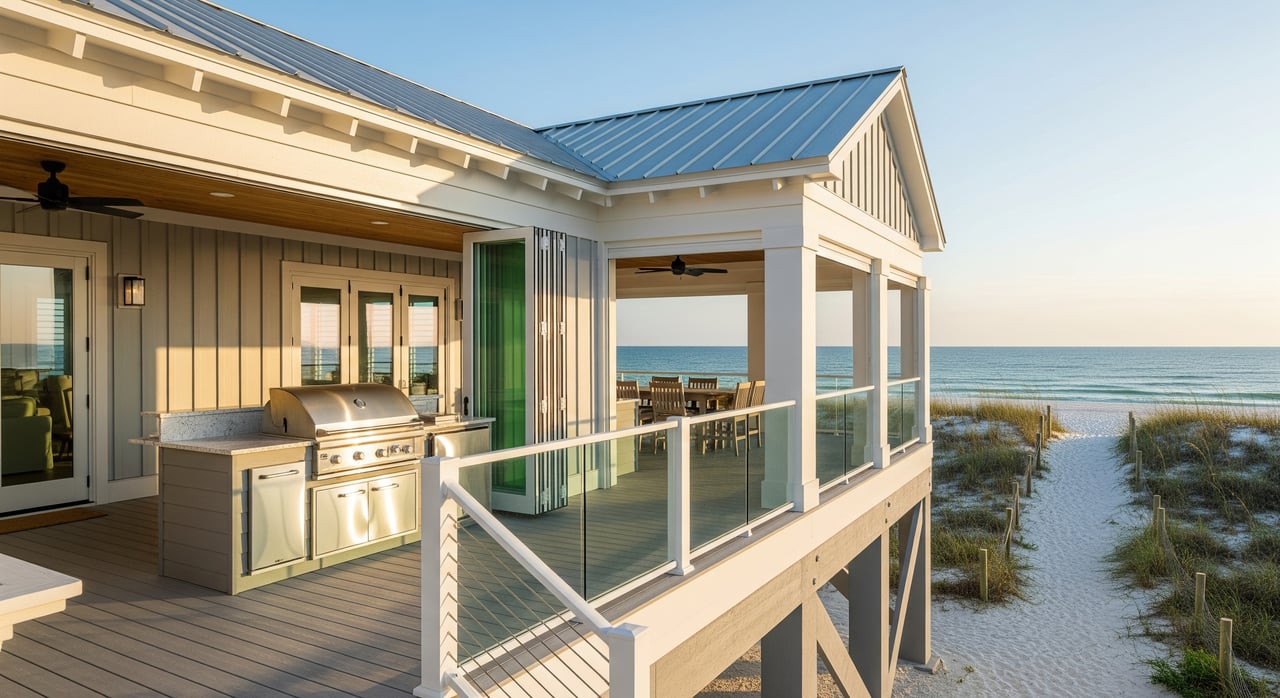
Salt air is beautiful, but it is tough on homes. In Destin, the Gulf’s sun, wind, and humidity can age materials faster and raise maintenance costs if you choose the wrong specs. If you own or plan to rent your home, you want upgrades that hold up, protect value, and keep guests comfortable. This guide shows you which coastal-grade improvements perform best here, what to ask your contractor for, and how they can support insurance and rental goals. Let’s dive in.
Why coastal-grade matters in Destin
Destin sits on the Gulf of Mexico, where salt air, high humidity, tropical storms, and intense UV are part of life. These conditions accelerate corrosion and wear on roofs, windows, decks, HVAC, and finishes. For background on our coastal climate and storm risks, review the NOAA coastal and storm resources and regional data from NOAA.
Florida’s coastal codes and wind-borne debris rules drive higher performance standards for homes near the water. The Florida Building Code outlines wind design criteria, product approvals, and installation practices that matter for resilience. You can confirm requirements and product approvals through the Florida Building Code portal. FEMA also provides practical guidance on wind, flood, and coastal mitigation for homeowners; see FEMA’s coastal mitigation guidance.
Insurance underwriters in Florida often recognize mitigation features like impact glazing, robust roof systems, and FORTIFIED standards with premium credits. Exact credits vary by carrier, so get written verification. For program details, see IBHS FORTIFIED and the Florida Office of Insurance Regulation.
High-impact upgrades with the right specs
Impact-rated windows and doors
Impact glass reduces storm damage, water intrusion, and post-event downtime. It also cuts noise and filters UV for better comfort.
- What to request:
- Florida Product Approval or Miami-Dade NOA when applicable, tested for local design wind pressures.
- Laminated, insulated glazing and frames with marine-grade hardware. Use 316 stainless fasteners in exposed areas.
- Lifecycle and care:
- Typical service life is 20 to 30-plus years. Clean salt deposits and inspect seals and weep holes annually. Replace non-marine hardware sooner if needed.
- Bonus:
- Many insurers offer mitigation discounts for certified impact glazing. Confirm with your carrier.
Standing-seam metal roof
A properly detailed standing-seam metal roof is one of the most durable choices for the Gulf. It can reduce wind damage risk and extend replacement cycles compared to shingles.
- What to request:
- Mechanically seamed panels with clips that allow thermal movement.
- Marine-rated coil coatings such as PVDF (often known as Kynar) and stainless fasteners where exposed.
- Underlayment and deck attachment per the Florida Building Code and manufacturer guidance.
- Lifecycle and care:
- Quality standing-seam systems commonly last 30 to 60-plus years. Plan for periodic inspections and potential recoats every 10 to 20 years depending on finish and exposure.
- Cost reality:
- Higher upfront cost than architectural shingles, but far lower replacement frequency and less storm-related patching.
Composite or PVC decking
Composite and capped polymer boards resist rot, splintering, and fading better than traditional wood in our salt and humidity.
- What to request:
- Capped composite or 100 percent PVC boards with UV and stain warranties and slip-resistant textures.
- Hidden-fastener systems and 316 stainless exposed hardware. Ensure ventilation and drainage below the deck.
- Lifecycle and care:
- Warranties often run 25 years or more. Maintenance is usually annual cleaning instead of re-staining.
- Owner impact:
- Higher upfront cost than pressure-treated wood, but saves years of sanding, staining, and board replacement.
Exterior coatings and finishes
Marine exposure accelerates paint failure. Upgrading your paint system reduces how often you repaint and protects the substrate.
- What to request:
- 100 percent acrylic exterior paint with UV and salt resistance, or elastomeric coatings for stucco to bridge hairline cracks and keep water out.
- Correct surface prep and primers per manufacturer specs.
- Lifecycle and care:
- Premium systems can extend repaint cycles to roughly 7 to 15 years depending on exposure, versus 3 to 5 years for lower-grade paints in harsh conditions.
- Owner impact:
- Fewer full repaints, more touch-ups, and better long-term protection.
Corrosion-resistant fasteners and flashings
Failures often start at fasteners, flashings, and joints where salt concentrates. Protect these details and you protect the whole envelope.
- What to request:
- 316 stainless for exposed fasteners and hardware. 304 stainless may be acceptable where shielded; follow manufacturer guidance.
- Non-ferrous flashings and marine-grade sealants.
- Care:
- Inspect annually for corrosion and sealant breakdown. Replace compromised fasteners and refresh sealant joints as needed.
Mechanical systems that thrive in salt air
HVAC placement and coastal packages
Salt deposits shorten condenser life and reduce efficiency. Coastal-ready equipment and smart placement extend service life and cut energy waste.
- What to request:
- Outdoor units elevated and placed away from direct spray, with ventilated screens if needed.
- Coated or aluminum/alloy coils designed for coastal use and corrosion-protected cabinets.
- 316 stainless mounting hardware.
- Care:
- Schedule coil cleaning and inspections every 6 to 12 months in marine exposure. Expect fewer premature failures with coated coils and routine service.
Dehumidification and indoor air quality
High humidity is a comfort and maintenance issue, especially in vacation rentals with high occupancy.
- What to request:
- Properly sized AC with adequate latent capacity and, if needed, a dedicated dehumidifier.
- MERV-rated filtration appropriate to occupant needs. Maintain condensate drains and pans.
- Care:
- Replace filters more often than inland homes, and keep to a scheduled coil cleaning cadence.
Water heaters and plumbing
Salt and humidity increase corrosion risks for tanks and piping.
- What to request:
- Sacrificial anodes with planned replacement intervals. Consider tankless or corrosion-protected models.
- Elevate equipment in flood-prone areas per local code.
- Care:
- Inspect and replace anodes regularly. Evaluate galvanized runs for corrosion and consider PEX or CPVC for interior lines.
Insurance, rentals, and ROI insights
Resilient upgrades can improve both peace of mind and performance. Many Florida insurers offer credits for wind mitigation, impact glazing, roof-to-wall ties, and resilient roof coverings. The size of the credit depends on the property and the carrier, so get written estimates before you build or replace. Review the IBHS FORTIFIED program for recognized mitigation pathways at IBHS FORTIFIED and carrier oversight through the Florida Office of Insurance Regulation.
For rental properties, resilient upgrades reduce the chance of guest-affecting failures and post-storm cancellations. That stability can help sustain ADR and occupancy, especially during peak seasons. Prioritize impact glazing, a robust roof system, reliable HVAC with dehumidification, and corrosion-resistant details before cosmetic changes.
Local implementation checklist
Pre-upgrade steps
- Verify permitting and wind-design requirements with Okaloosa County Building Services and the Florida Building Code portal.
- Ask your insurer for written estimates of premium impacts for specific upgrades.
- Select contractors with coastal experience and relevant manufacturer certifications. Request references for Destin or similar Gulf properties.
- Confirm Florida Product Approval and understand warranty exclusions related to coastal corrosion.
Specs to request in bids
- Impact windows and doors:
- Florida Product Approval, design pressure ratings for your site, laminated IGU, corrosion-resistant frames, and 316 stainless fasteners.
- Roofing:
- Standing-seam panels with PVDF finish, stainless or coated fasteners, and code-compliant underlayment per the Florida Building Code.
- Decking:
- Capped composite or PVC boards, hidden fasteners or 316 stainless hardware, ventilated joist system, and corrosion-protected framing.
- Exterior finishes:
- 100 percent acrylic or elastomeric systems with manufacturer-approved prep and primers for coastal use.
- HVAC:
- Coastal coil coatings, elevated placement, ventilated screening if needed, and a service plan for coil cleaning every 6 to 12 months.
- Fasteners and flashings:
- 316 stainless for exposed locations, non-ferrous flashings, and marine-rated sealants.
Inspection and maintenance cadence
- Annually:
- Exterior sealants, flashings, fasteners, and paint touch-ups; deck wash and hardware check; HVAC coil inspection and filter changes.
- After major storms:
- Inspect windows and doors for seal failures, verify roof attachments and penetrations, check decks and railings, and confirm HVAC outdoor unit condition.
- Every 5 to 10 years:
- Recoat metal finishes per manufacturer guidance and evaluate HVAC coil coatings and water heater anodes.
Destin-specific upgrade priorities
- First priority: Impact-rated windows and doors, a standing-seam metal roof, and corrosion-resistant fasteners and flashings. These cut storm risk and reduce emergency repairs.
- Second priority: Composite or PVC decking and upgraded exterior coatings to reduce recurring maintenance.
- Third priority: HVAC coastal packages and dehumidification to improve comfort and protect interiors, especially for rentals.
Resilience resources to keep handy
- Review regional risk context and storm information from NOAA.
- See coastal mitigation best practices from FEMA.
- Confirm code and product approvals via the Florida Building Code portal.
- Explore mitigation pathways and certifications at IBHS FORTIFIED.
- Check carrier oversight and rules through the Florida Office of Insurance Regulation.
Strong coastal-grade choices do more than survive the Gulf. They cut lifetime maintenance, reduce downtime after storms, and help your home show better to buyers and guests. If you are weighing upgrades or planning an acquisition, let a builder-led, operations-focused advisor map your priorities to your goals.
Ready to align your CAPEX plan with rental performance and resale value? Connect with Christopher Harper to Request a Valuation & Turnkey Management Plan.
FAQs
What are the most valuable coastal upgrades for Destin homes?
- Prioritize impact windows and doors, a standing-seam metal roof, corrosion-resistant fasteners, composite or PVC decking, and coastal-ready HVAC with dehumidification.
Do impact windows lower insurance premiums in Florida?
- Many carriers offer mitigation credits for certified impact glazing, but amounts vary; request written estimates from your insurer before you invest.
How long does a metal roof last near the Gulf?
- Quality standing-seam metal roofs commonly provide 30 to 60-plus years of service when installed and maintained to coastal specifications.
Are composite decks worth it in salt air?
- Yes. Composite or PVC decking cuts refinishing and replacement cycles, resists rot and splintering, and simplifies upkeep compared to wood in coastal conditions.
How often should you repaint a beach house exterior?
- With premium coastal paint systems and proper prep, repaint cycles often extend to 7 to 15 years depending on exposure and product quality.
What is IBHS FORTIFIED and should I pursue it?
- FORTIFIED is a third-party resilience standard that can reduce storm damage risk and may support insurance credits; it can be worthwhile for Destin owners.